
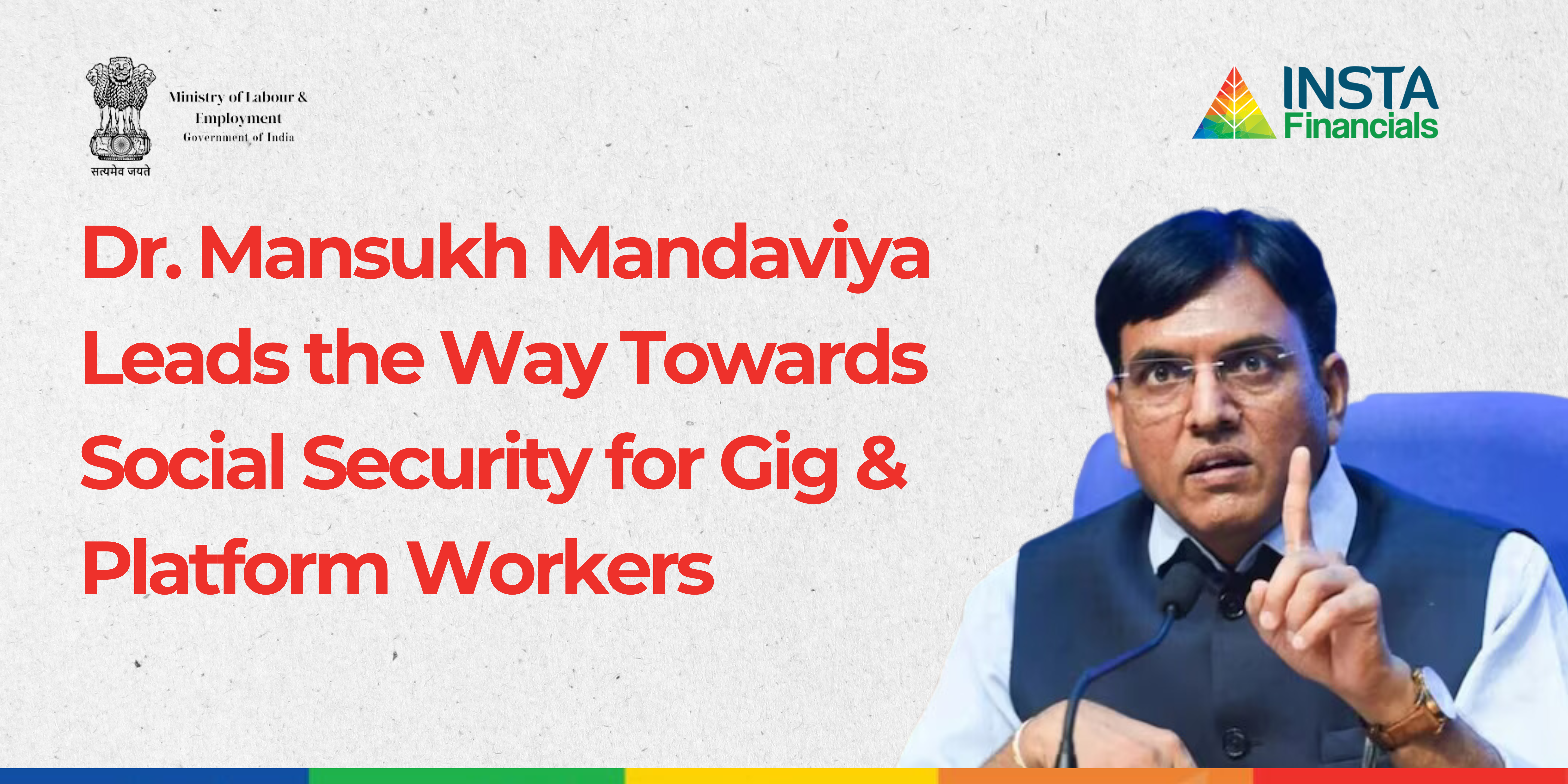
Dr. Mansukh Mandaviya Leads the Way Towards Social Security for Gig and Platform Workers
In a key move to ensure social security for gig and platform workers, Union Minister of Labour & Employment and Youth Affairs & Sports, Dr. Mansukh Mandaviya, chaired a high-level meeting with major platform aggregators in New Delhi. This meeting was convened to establish a comprehensive framework that would address the unique needs of the growing gig economy workforce. The aim is to ensure that these workers have access to essential social security protections through the e-Shram portal.
Key Highlights of the Meeting
Formation of a Committee for Social Security Framework
One of the critical outcomes of the meeting was Dr. Mandaviya’s directive to form a dedicated committee. This committee will gather insights from all stakeholders to create a robust social security framework for gig and platform workers. As the gig economy continues to expand, it is crucial to address the lack of formal social safety nets for workers in this sector. The committee will deliberate on key issues such as health insurance, pension schemes, and worker protection, aiming to tailor solutions that fit the specific needs of gig and platform workers.
Onboarding Workers on the e-Shram Portal
A major focus of the meeting was the push to register gig and platform workers on the e-Shram Portal. This government portal serves as a national database of unorganized workers, aimed at providing access to various social security schemes. Dr. Mandaviya set an ambitious target to onboard gig and platform workers onto the portal within the next three months. This registration is a critical step towards extending government benefits to this largely unorganized workforce, ensuring they are not left behind in terms of social welfare.
The Minister emphasized the role of platform aggregators in assisting with this registration drive. Companies such as Urban Company, Swiggy, Zomato, Uber, Ola, Amazon, and others, were urged to ensure that all eligible workers are registered on the portal. By doing so, these platforms can actively contribute to the welfare of the gig workforce, who are essential to their operations.
Encouraging Aggregators to List Job Vacancies on the NCS Portal
Dr. Mandaviya also highlighted the importance of utilizing the National Career Service (NCS) portal for broadening employment opportunities. The NCS portal provides a variety of services for job seekers and employers, making it a valuable resource for matching talent with job openings. Aggregators were encouraged to list their job vacancies on the platform, which would help millions of workers across India access new employment opportunities. This move can benefit both employers and workers, fostering a more inclusive job market.
Collaborative Effort from Key Industry Players
The meeting saw participation from eight major platform aggregators, including Urban Company, Swiggy & Instamart, Zomato & Blinkit, Porter, Even Cargo, Amazon, Uber, and Ola. Additionally, organizations such as FICCI, Deloitte, CII, Employer’s Federation of India, IndiaTech, and OMI were part of the discussion. The participants shared valuable insights, expressed strong support for the Ministry’s initiatives, and appreciated the steps taken towards improving the social security framework for gig workers.
The Importance of Social Security for Gig Workers
Gig and platform workers form an essential part of India’s economy, providing services in areas such as food delivery, transportation, logistics, and home services. However, the informal nature of their employment often leaves them without access to basic social security benefits like health insurance, pensions, or paid leave. With the growing reliance on these workers, it is crucial to establish a framework that provides them with protection and benefits equivalent to those available to traditional employees.
By registering on the e-Shram portal, gig workers can access a range of government initiatives and social security schemes, including insurance and financial support during crises. The government’s focus on this sector highlights the need to protect the rights of workers and ensure their well-being in the evolving economy.
In Conclusion, The meeting chaired by Dr. Mansukh Mandaviya marks a significant step towards providing much-needed social security to gig and platform workers in India. The formation of a dedicated committee to deliberate on key issues, the push for onboarding workers on the e-Shram portal, and the encouragement for aggregators to list job vacancies on the NCS portal are all part of a broader strategy to support this vital workforce.
As the gig economy continues to grow, the government’s efforts to safeguard workers’ rights and ensure their access to social security benefits are crucial in creating a more equitable and inclusive labor market. With the support of industry stakeholders, this initiative could pave the way for a better future for millions of gig and platform workers across India.


